Wildlife safety
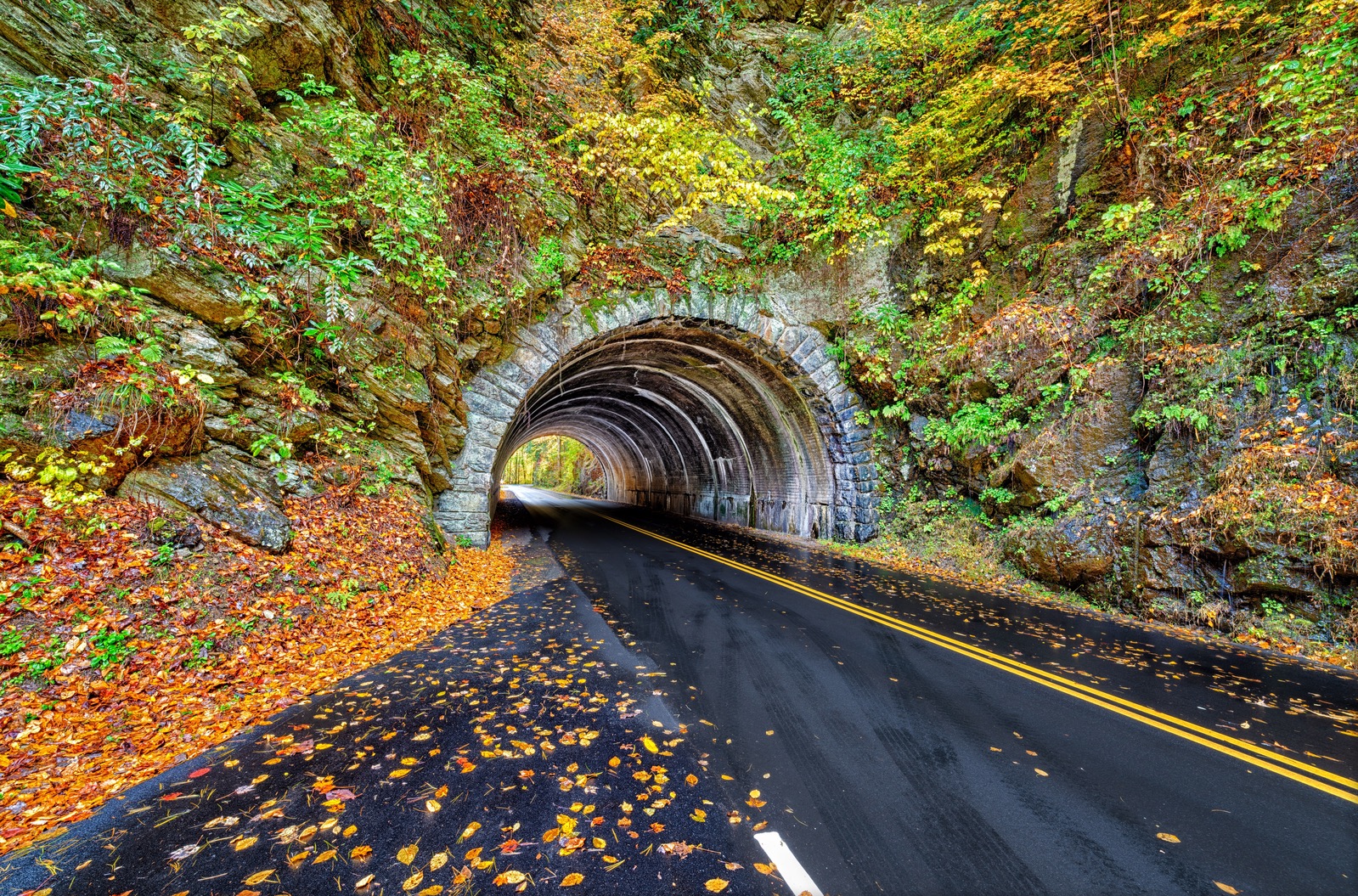
A stone-arched road tunnel framed by autumn foliage, with a wet road scattered with fallen leaves.

A field guide to the mountains

The Wild Side of the Smokies

The mountains were wild long before we arrived.

Beyond the winding roads and mist-covered ridgelines, the Smokies are home to an extraordinary world of wildlife. Black bears wander through the forests, elk graze in mountain valleys, and coyotes call through the night.

Some animals have roamed these mountains for centuries. Others have disappeared, returned, or found their way here more recently.

At Feral Woods Wolf Den, we believe part of experiencing the mountains is understanding the wilderness around us. Meet the locals, discover their stories, and learn how to give them the space they deserve.

Photo: Supplied by Feral Woods Wolf Den

The field guide

Meet the Locals

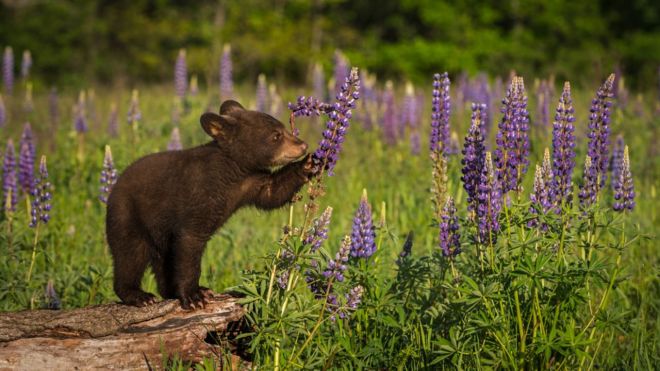
A black bear cub standing on a log and sniffing a purple lupine flower in a meadow.
Photo: Supplied by Feral Woods Wolf Den

The icon of the Smokies

Black Bear

Black bears have called these forests home for generations. They're skilled climbers, remarkably curious, and one of the region's most recognizable residents.

Where you might see oneForests, mountain roads, and occasionally developed areas.

  • Stay calm, and never approach or feed a bear.
  • Keep at least 150 feet (50 yards) away inside the national park. Approaching closer is illegal there.
  • Never run. If the bear notices you or changes its behavior, slowly back away while facing it.
  • If it follows you, change direction. If it keeps following, stand your ground, make noise and act aggressively. Never turn your back.
  • If a black bear attacks and isn't after your food, fight back with everything you have. Don't play dead.
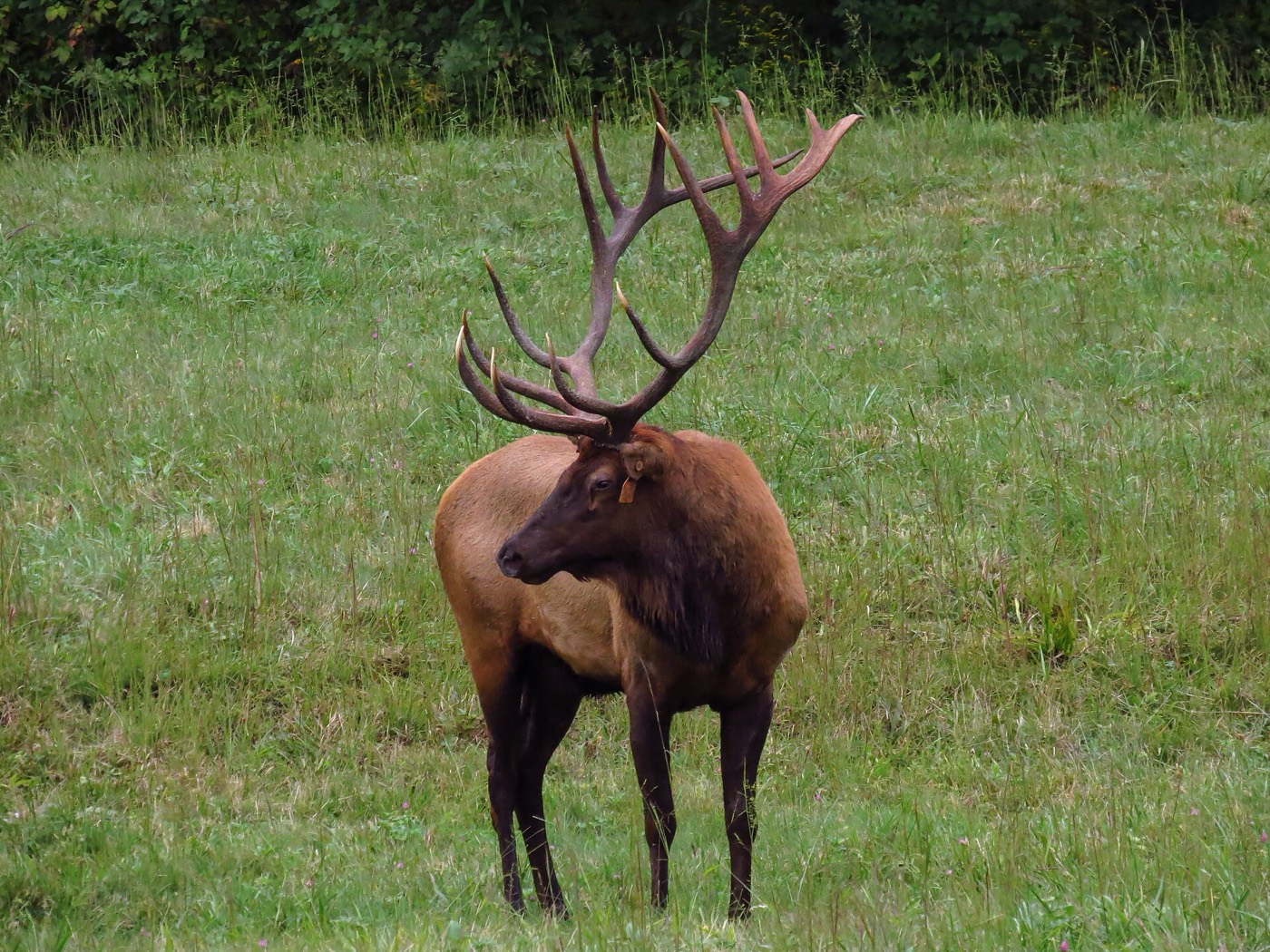
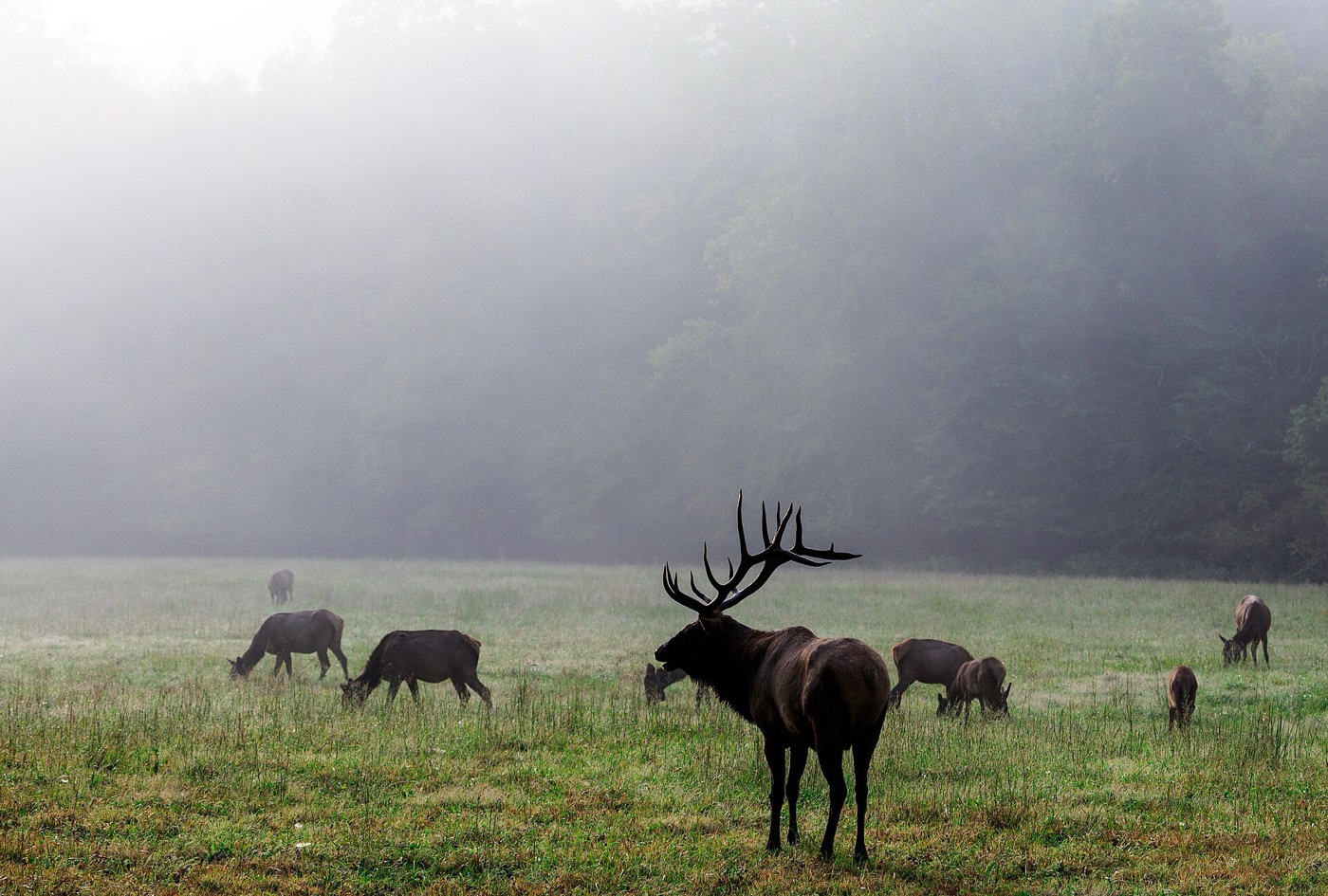
A bull elk with large antlers standing in a green meadow.
Photo: Warren Bielenberg, Great Smoky Mountains NP (public domain) (opens the photo's source page in a new tab)

The return of a giant

Elk

Elk once roamed these mountains before disappearing from the region. In 2001, a reintroduction program brought these magnificent animals back to the Smokies.

Where you might see oneCataloochee Valley and Oconaluftee.

  • Stay at least 25 yards (75 feet) away inside the national park. Closer is illegal, as is any distance that disturbs the elk.
  • Never approach an elk or its calves. Cows with calves and bulls will defend their space.
  • Take extra care in fall, when the rut runs from early September to late October.
  • Leave elk a clear path to move away.
  • Watch from your vehicle when you can. Elk are most active early in the morning and late in the evening.
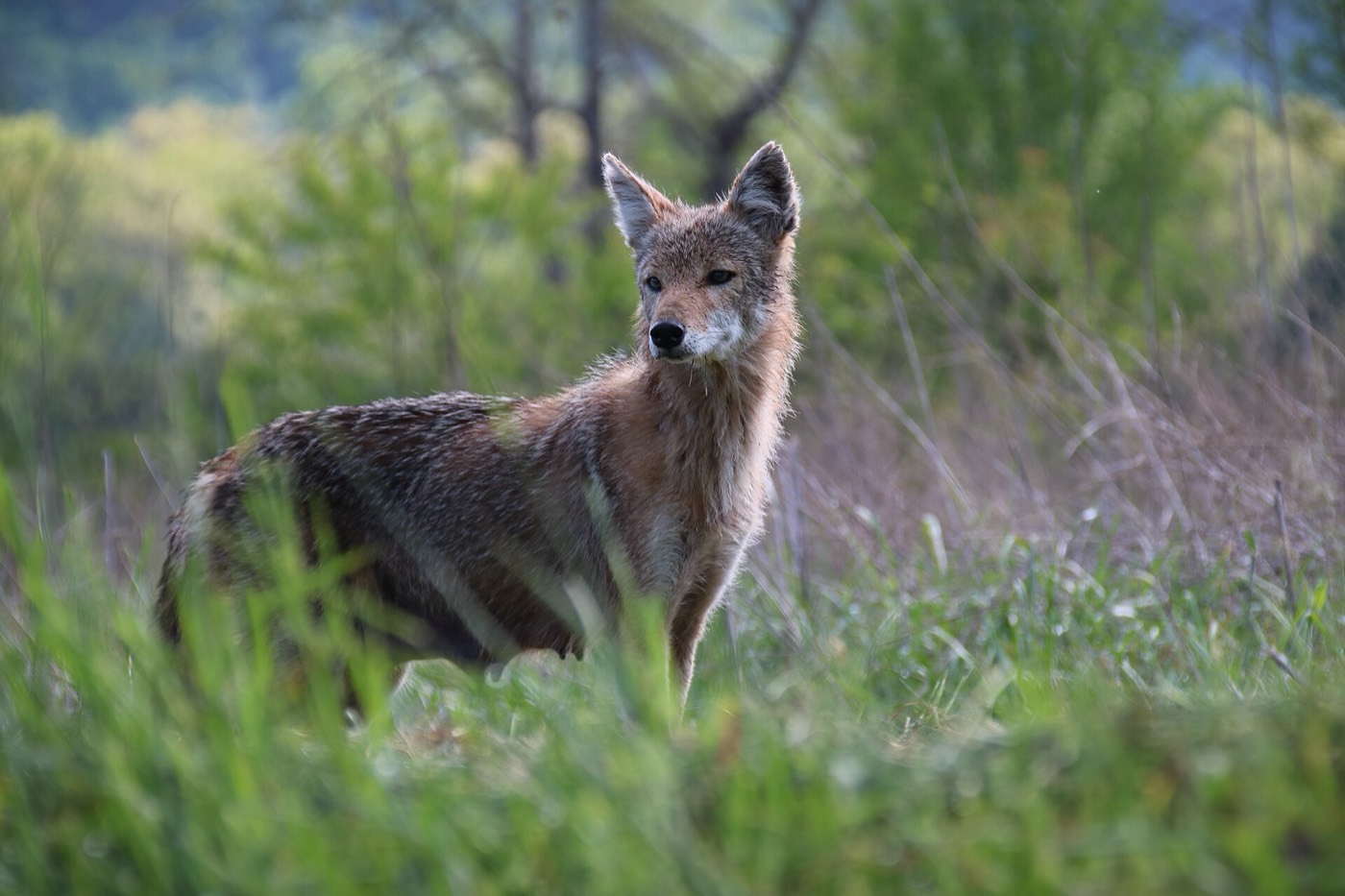
A coyote standing alert in a grassy meadow, looking toward the camera.
Photo: Warren Bielenberg, Great Smoky Mountains NP (public domain) (opens the photo's source page in a new tab)

The voice in the night

Coyote

Coyotes expanded into the Smokies as landscapes and wildlife populations changed. Today, their unmistakable calls are part of the mountain soundscape.

Where you might see oneWoodland edges, fields, and quiet roadsides.

  • Never feed or approach coyotes, and keep a safe distance.
  • If one approaches, face it, make yourself look larger, and use a firm voice.
  • Don't run, and don't encourage it to come closer.
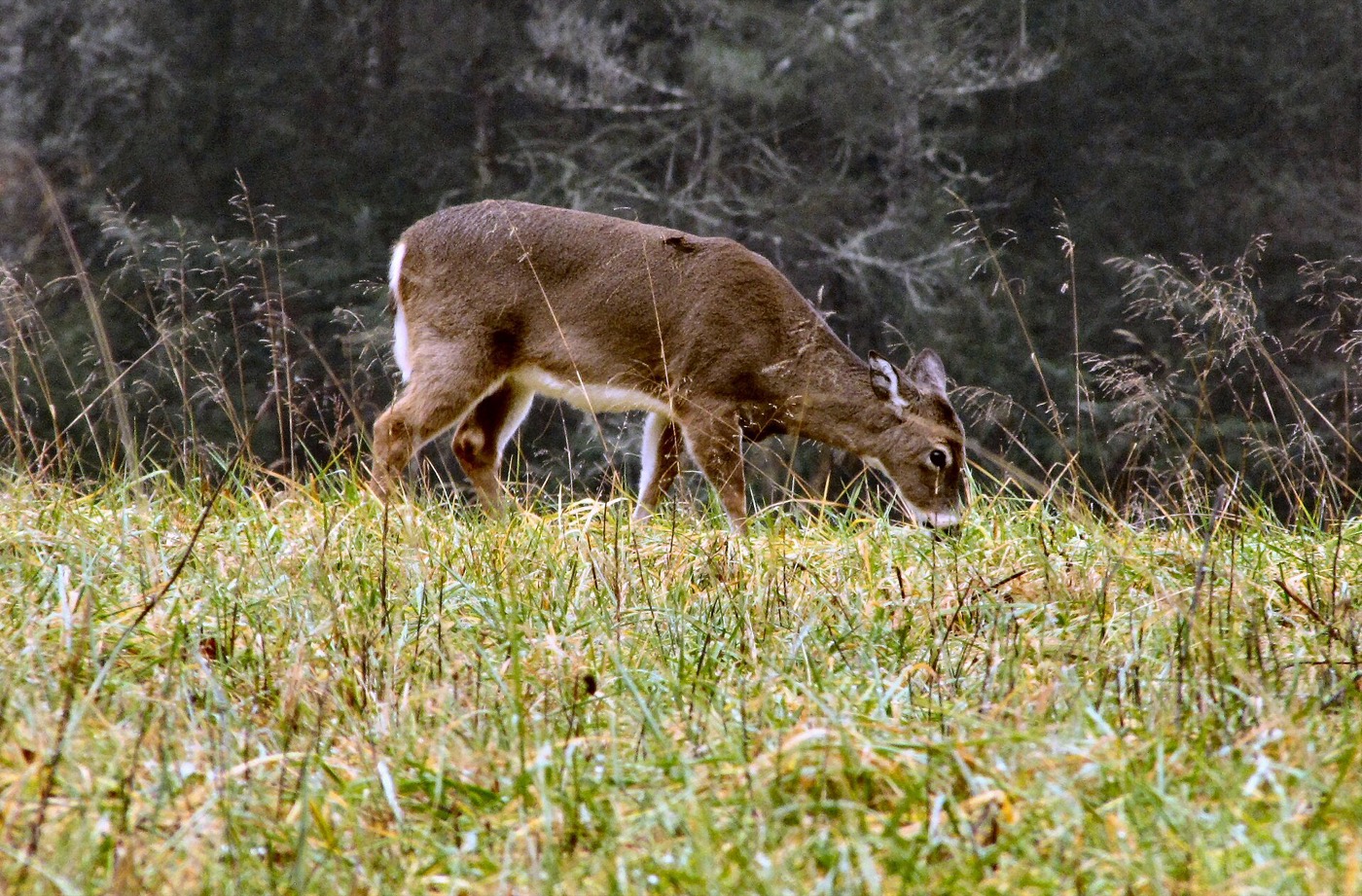
A white-tailed doe grazing in a meadow at the edge of the woods in Cades Cove.
Photo: Brian Stansberry, CC BY 3.0 (opens the photo's source page in a new tab)

The quiet forest wanderer

White-Tailed Deer

Graceful, watchful, and often surprisingly difficult to spot, white-tailed deer are longtime residents of the Appalachian forests.

Where you might see oneCades Cove, meadows, and wooded clearings.

  • Watch from a distance. It's illegal in the park to feed, touch, tease or intentionally disturb wildlife.
  • Never feed or approach deer.
  • Don't touch or disturb a fawn, even if it looks alone.
  • Drive carefully, especially around dawn and dusk.
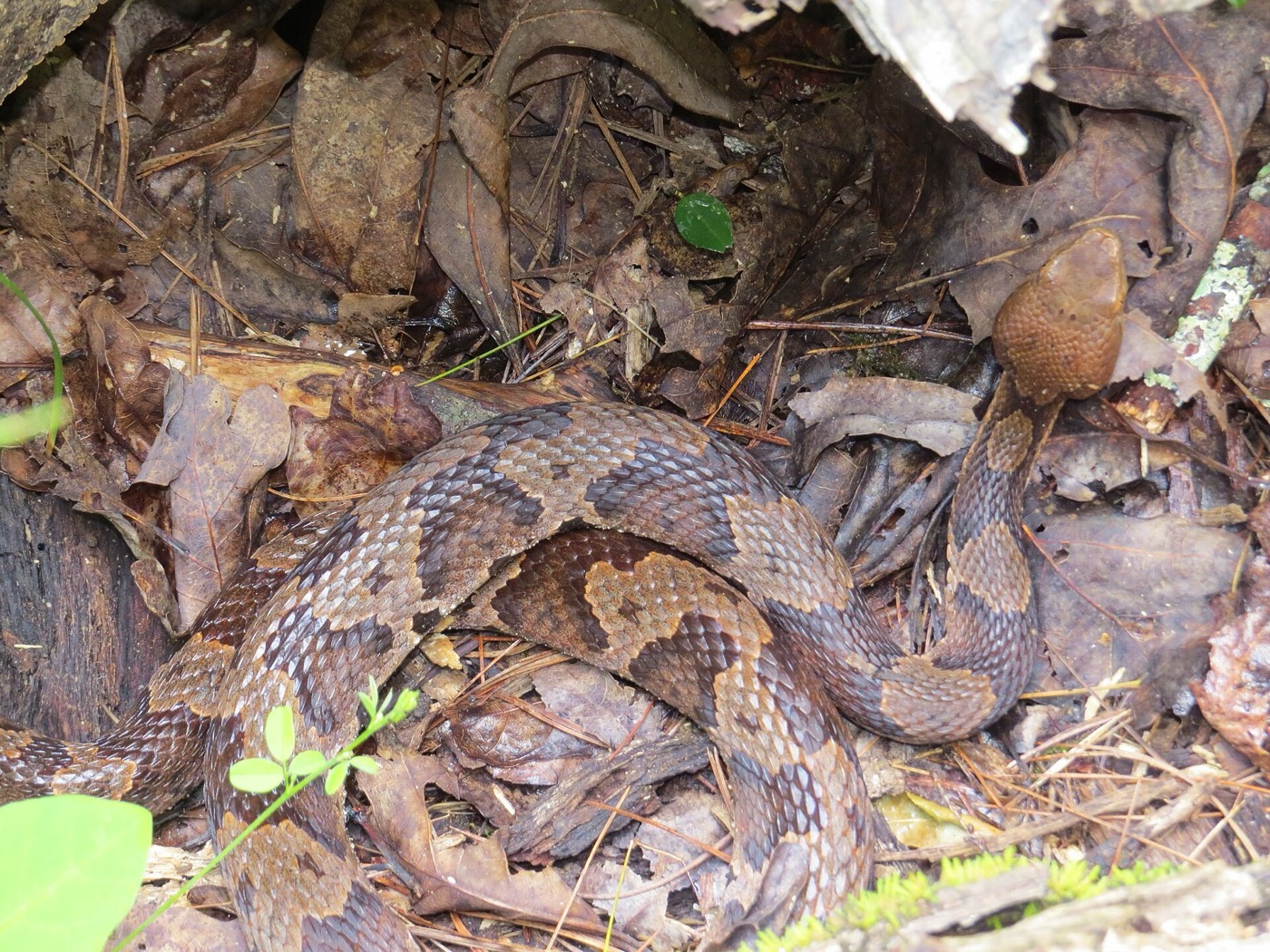
A northern copperhead, camouflaged among dead leaves on the forest floor.
Photo: Warren Bielenberg, Great Smoky Mountains NP (public domain) (opens the photo's source page in a new tab)

The hidden residents

Mountain Snakes

The Smokies are home to many snake species, most of which are harmless to people. Of the 23 found in the park, only two are venomous: the northern copperhead and the timber rattlesnake.

Where you might see oneRocky areas, forest trails, sunny clearings, and fallen logs.

  • Give every snake plenty of space.
  • Never try to pick up, corner, or relocate a snake.
  • Watch where you put your hands and feet on trails.
  • If someone is bitten, call 911 and get emergency medical care right away.
  • Don't use a tourniquet, cut the wound, or try to suck out venom.
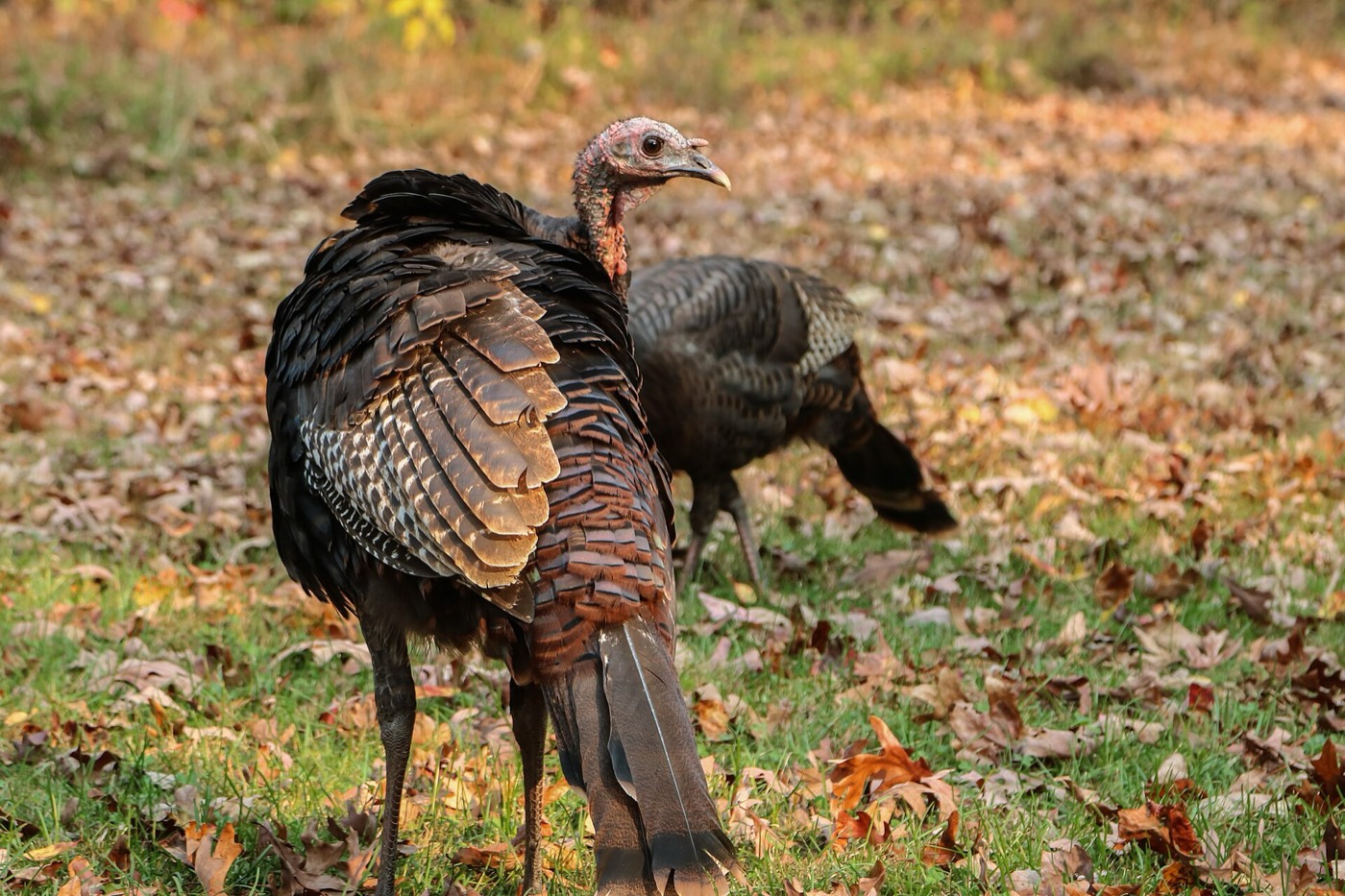
Two wild turkeys on a forest floor covered in fallen autumn leaves.
Photo: Warren Bielenberg, Great Smoky Mountains NP (public domain) (opens the photo's source page in a new tab)

The forest's feathered local

Wild Turkey

These remarkable birds are among the most recognizable residents of the Smokies. You might even spot an entire group crossing a quiet mountain road.

Where you might see oneCades Cove, forest edges, and grassy areas.

  • Give birds room to pass, and don't chase or feed them.
  • Turkeys can be aggressive, so keep your distance.
  • Watch for wildlife crossing the road.

A piece of forgotten history

When Wolves Roamed the Smokies

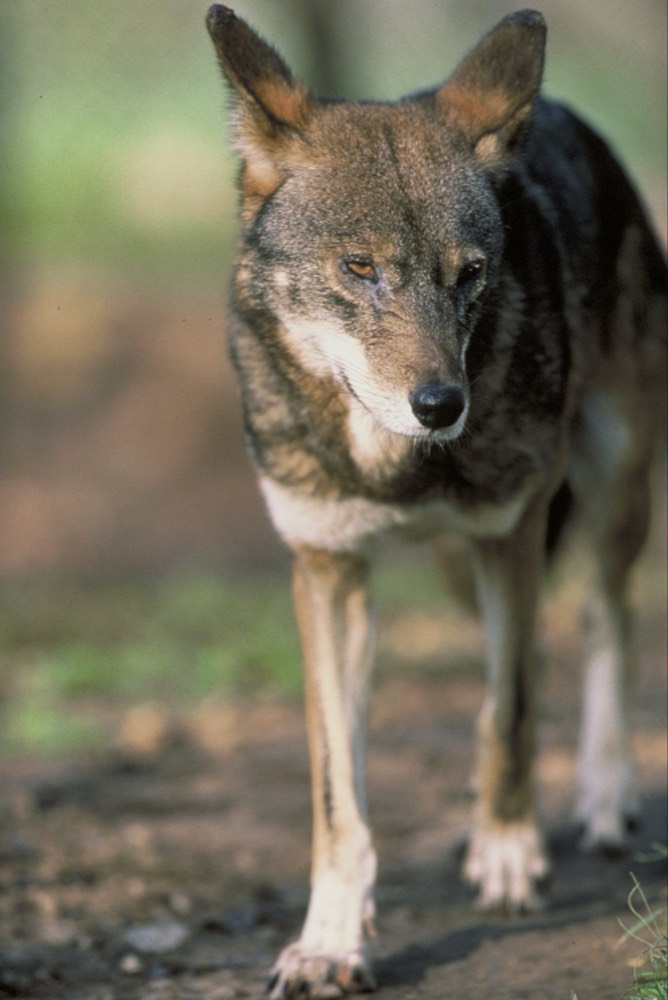
Long before the Smokies became a national park, wolves roamed these ancient mountains.

As human settlement expanded, hunting and habitat loss contributed to their disappearance from the region.

In 1991, conservationists began an ambitious effort to return red wolves to Great Smoky Mountains National Park. Wolves were released in the Cades Cove area, but the population struggled to establish itself. Too few pups survived, and the wolves never settled into territories of their own. In 1998, the experiment was ended.

Today, there are no established wild wolf populations in the Smokies.

But their story remains woven into the history of these mountains, a reminder that the wilderness is always changing and always worth protecting.

Feral Woods Wolf Den carries a little piece of that wild history forward.

Before you head out

A Little Wilderness Wisdom

A few things worth knowing before exploring.

150 ft
Minimum distance from black bears inside the national park
75 ft
Minimum distance from elk inside the national park
Never
Feed or approach wildlife
911
Emergency assistance

Those distances are park rules, not a comfortable limit. Around the cabin, give any wild animal more room than you think it needs.

Around the cabin

  • Keep food, leftovers and scented items indoors.
  • Never leave trash or food outside overnight.
  • Clean the grill after you use it.
  • Don't leave food unattended outdoors.
  • Never approach wildlife for a photograph.
  • Keep children close when you're outside.
  • If wildlife approaches, give it space and head indoors when it's safe to.

Bears in developed areas or acting unusually can be reported to the park at (865) 436-1230.

Official park wildlife guidance (opens in a new tab)

Look, don't touch

Where the Wild Things Are

Some of the most memorable moments in the Smokies happen when you least expect them. Here are a few beautiful places to observe the mountains' wild residents from a respectful distance.

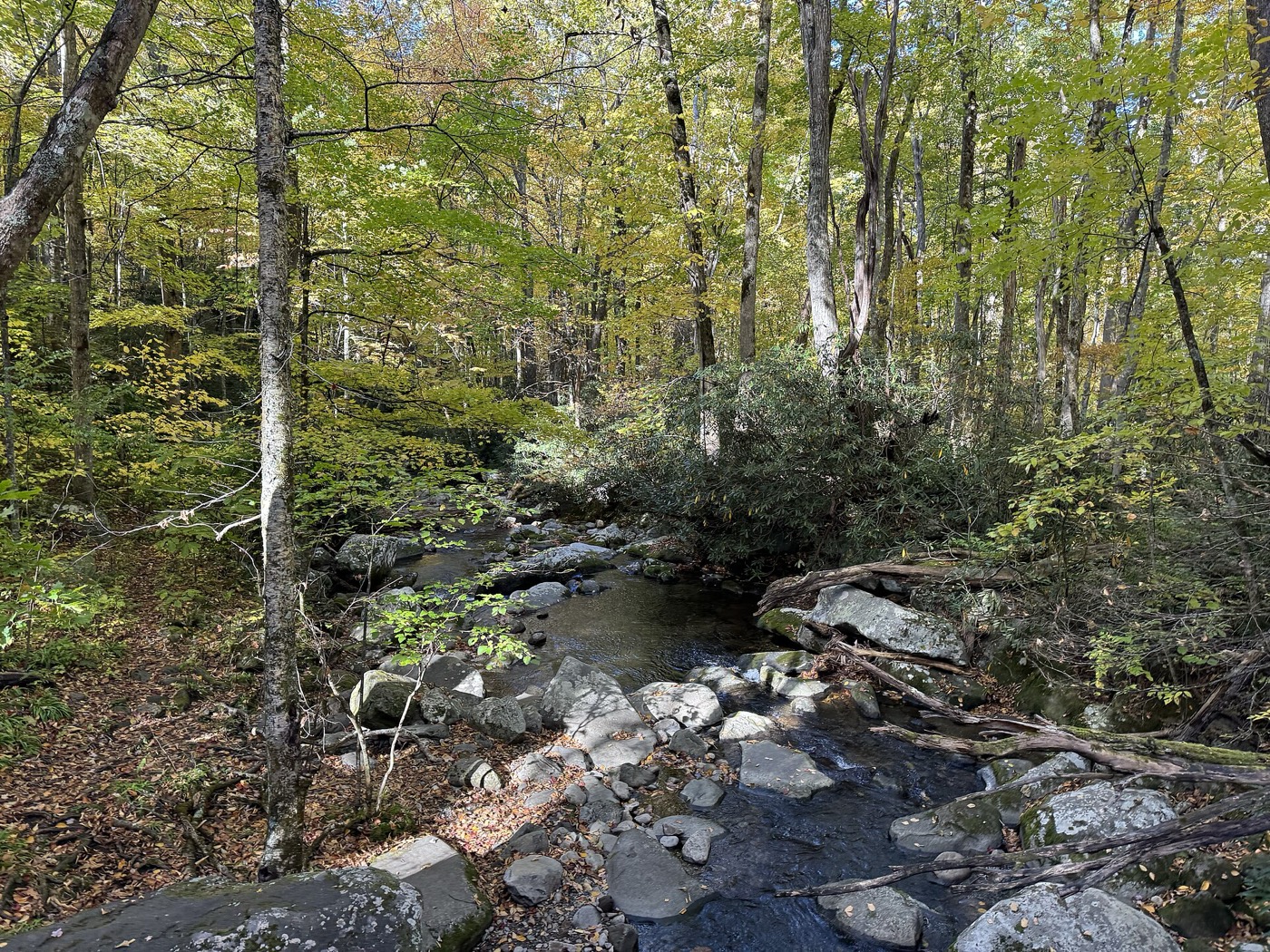
A rocky stream running through autumn woodland along the Roaring Fork Motor Nature Trail.
Photo: Sarah Stierch, CC BY 4.0 (opens the photo's source page in a new tab)

Roaring Fork Motor Nature Trail

Best known for: Woodland wildlife · Scenic forest views

A winding mountain drive through dense forest, historic landscapes, and beautiful woodland scenery.

A narrow, one-way loop of about 5.5 miles. Buses, trailers and motor homes aren't allowed, and the road is closed for part of the year, so check the park's seasonal road status.

Get directions to Roaring Fork Motor Nature Trail (opens a map in a new tab)

Wildlife is unpredictable. Nothing here is a promise that you'll see an animal, and that's part of the point.

Back to the Den.

After a day out with the locals, there's a hot tub, a fire table and a very comfortable couch waiting.